Protocol Synchronization for Loyalty Rewards in Live Dealer Mobile Applications
Written by Sam Peters · Nov 27, 2026
Protocol Synchronization for Loyalty Rewards in Live Dealer Mobile Applications
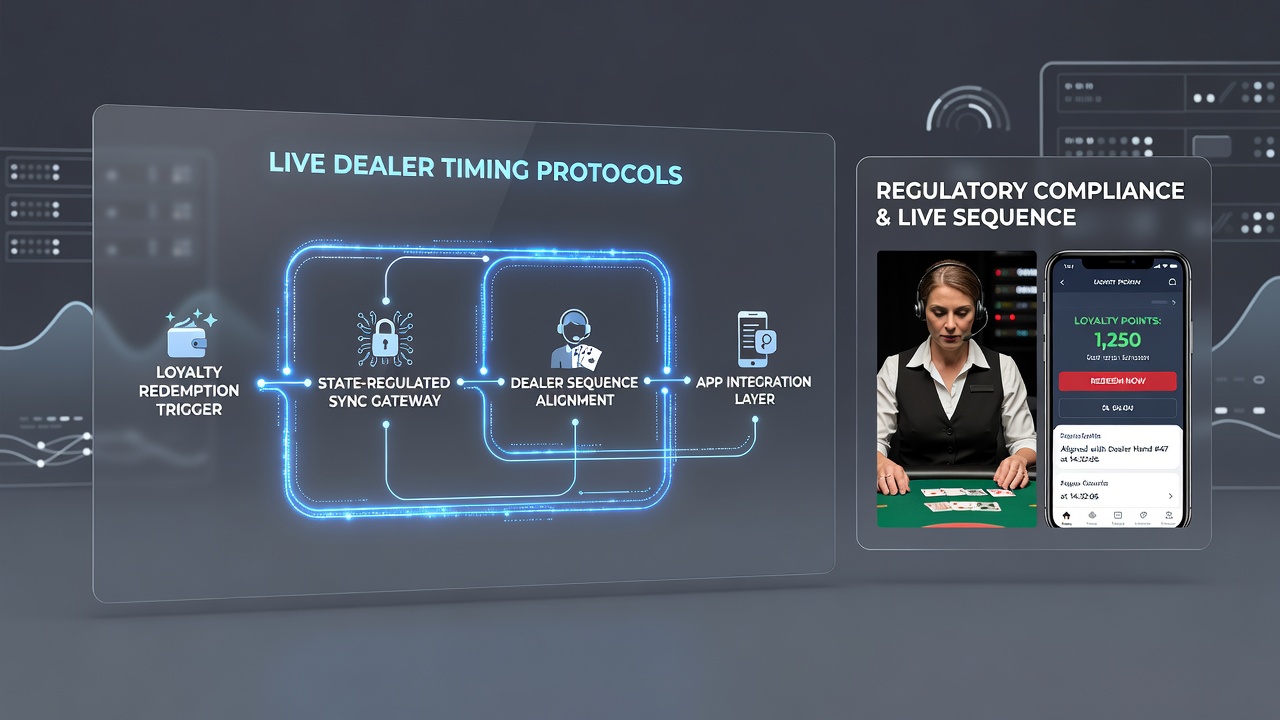
State-regulated mobile casino platforms rely on precise timing protocols to connect loyalty redemption events with live dealer sequences, and these systems process player actions through coordinated timestamp matching across distributed servers. Data from industry reports shows that synchronization occurs when redemption requests trigger at specific intervals during table game rounds, allowing points to convert into bonuses without interrupting dealer workflows in states such as New Jersey and Pennsylvania.
Core Components of Timing Alignment
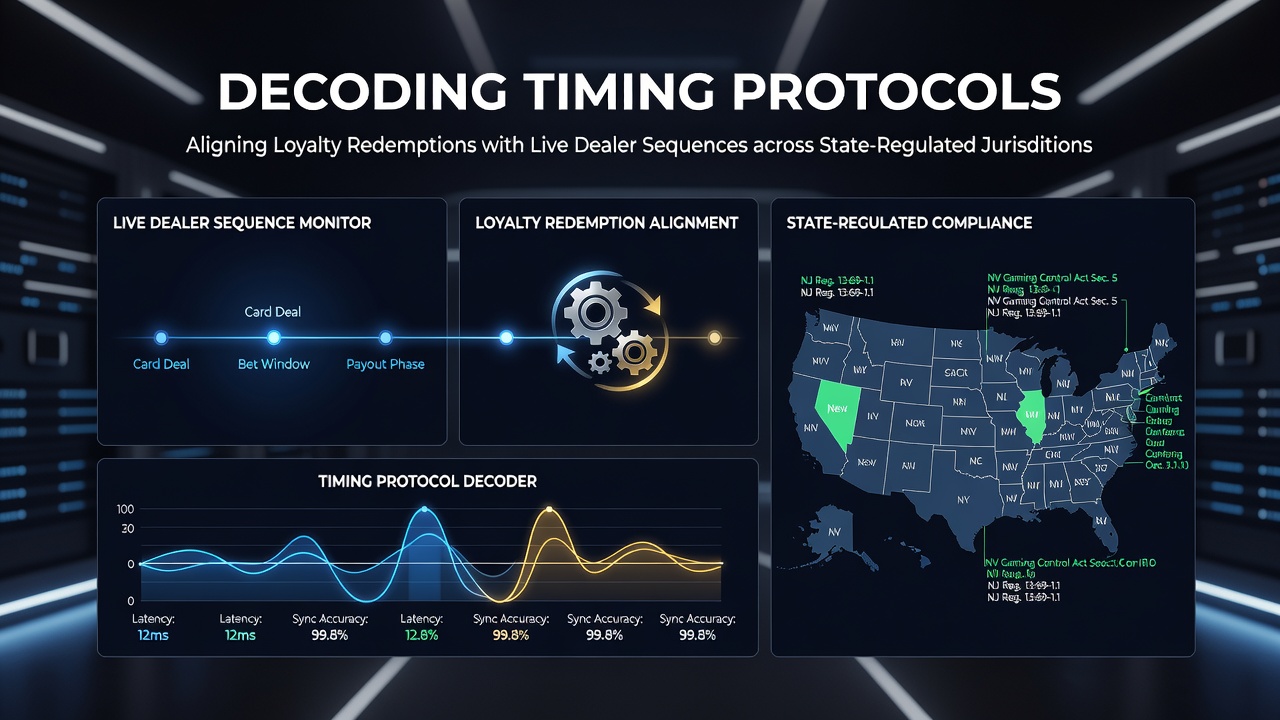
Developers implement sequence-based triggers that monitor live dealer feeds in real time, where each card shuffle or wheel spin generates a unique timestamp that loyalty engines reference before approving redemptions. According to records from the New Jersey Division of Gaming Enforcement, these protocols use API handshakes between the game provider servers and the operator loyalty database to confirm that a redemption request aligns with an active betting window, reducing latency to under 200 milliseconds in most deployments.
Operators maintain audit logs that record every redemption attempt alongside the corresponding dealer sequence identifier, and regulators review these logs during compliance checks to verify that rewards activate only after the live round has progressed past the commitment phase. This structure prevents premature point deductions while ensuring players receive credits at the exact moment their selected sequence resolves.
State-Level Implementation Patterns
Across different jurisdictions, timing protocols adapt to local technical standards, yet they share common elements such as millisecond-level clock synchronization between mobile apps and backend systems. In Michigan, for instance, licensed platforms integrate with the state’s central monitoring service that cross-checks redemption timing against live dealer streams, and similar frameworks appear in West Virginia and Delaware through shared technology vendors.
Researchers at the University of Nevada, Reno have documented how these alignments function in multi-state environments, noting that geofencing combined with sequence verification maintains regulatory separation while allowing seamless player movement between compatible apps. The process involves a three-step handshake where the app sends a redemption signal, the dealer sequence server confirms the current round state, and the loyalty module executes the reward only upon mutual timestamp validation.
Technical Mechanisms Behind Sequence Matching
Live dealer sequences consist of discrete events such as card deals, bet closures, and result announcements, each carrying metadata that loyalty protocols parse to determine redemption eligibility. Platforms employ event-driven architectures where a redemption request waits for the next sequence boundary before processing, and this waiting period typically lasts between one and three seconds depending on game type.
Encryption layers protect the timestamp data during transmission, while redundant server clusters handle failover to keep synchronization intact during peak traffic periods. Observers note that November 2026 saw several operators upgrade their clock synchronization hardware to atomic standards, which improved alignment accuracy across state lines and reduced disputes related to delayed reward postings.
Regulatory Oversight and Data Tracking
Regulatory bodies require operators to submit quarterly reports detailing redemption timing performance metrics, including success rates and any sequence mismatches that occurred. These submissions help authorities track whether protocols maintain fairness for players while protecting game integrity, and the American Gaming Association has compiled aggregate figures showing consistent improvement in cross-platform synchronization since 2024.
Third-party auditors test the protocols through simulated high-volume scenarios, confirming that redemptions do not influence dealer randomness or player outcomes. The alignment process remains invisible to end users yet forms a critical layer that supports responsible gaming features such as session limits tied to reward activity.
Future Developments in Cross-Device Coordination
Emerging standards focus on expanding sequence matching to include multi-device sessions, where a player switches from tablet to phone mid-round without breaking the loyalty protocol chain. Industry groups continue to refine communication formats that allow different software providers to share timing data securely under varying state rules.
Continued testing in controlled environments indicates that enhanced predictive algorithms could anticipate redemption windows based on historical sequence patterns, though current implementations still require explicit player initiation for each reward conversion. These advancements build on existing infrastructure without altering core regulatory requirements.
Conclusion
Timing protocols that align loyalty redemptions with live dealer sequences represent a foundational element of state-regulated mobile casino operations, and ongoing refinements ensure these systems remain accurate and compliant. Through coordinated timestamps, sequence verification, and regulatory reporting, platforms deliver rewards that integrate smoothly with ongoing table game activity across multiple jurisdictions.