Regulatory Timelines Accelerating Real-Time Payment Clearances in Multi-Jurisdictional Mobile Gaming
Written by Greta Albrecht · Oct 30, 2026
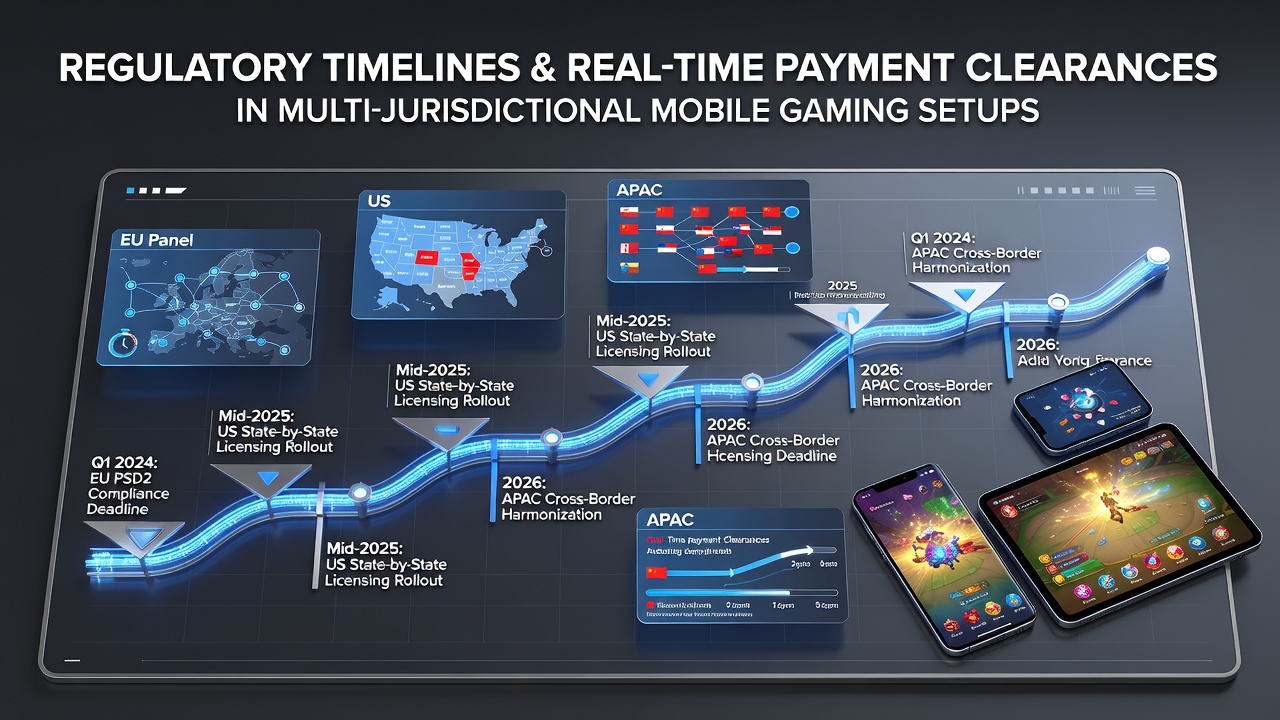
Regulatory Timelines Accelerating Real-Time Payment Clearances in Multi-Jurisdictional Mobile Gaming
Regulatory bodies across multiple regions have established staggered implementation dates that directly influence how real-time payment systems operate in mobile gaming platforms spanning several jurisdictions, and these deadlines continue to shape settlement speeds as operators adapt infrastructure to meet compliance windows.
Data from the Bank for International Settlements shows that instant payment schemes reached 70 percent adoption in participating markets by mid-2025, yet mobile gaming companies face additional layers of licensing requirements that extend beyond standard financial rules because transactions cross national boundaries where gambling regulations differ sharply.
Key Implementation Deadlines Across Regions
The European Central Bank set January 2025 as the target for full rollout of instant credit transfers under its revised framework, and this date pushed many mobile gaming operators to integrate faster clearance protocols so that player deposits and withdrawals could process without violating cross-border data rules in member states. Observers note that operators handling accounts in both EU countries and non-EU territories needed to segment payment flows to avoid delays when one jurisdiction's rules took precedence over another's.
In North America, several state-level regulators aligned their mobile gaming payment standards with federal instant payment guidelines that became mandatory in October 2026, and this alignment required platforms to demonstrate sub-second authorization capabilities during licensing renewals. Researchers tracking compliance patterns found that companies operating across multiple US states and Canadian provinces adjusted their backend systems well in advance because staggered state deadlines created overlapping preparation periods.
Technical Adjustments Driven by Compliance Windows
Multi-jurisdictional setups often rely on layered wallet architectures that route transactions through different clearing houses depending on player location, and regulatory timelines have forced developers to embed automated compliance checks that verify payment rail eligibility within milliseconds. Studies from academic institutions in Australia indicate that platforms failing to meet these embedded checks experienced clearance failures exceeding 12 percent during testing phases that simulated October 2026 rule changes.
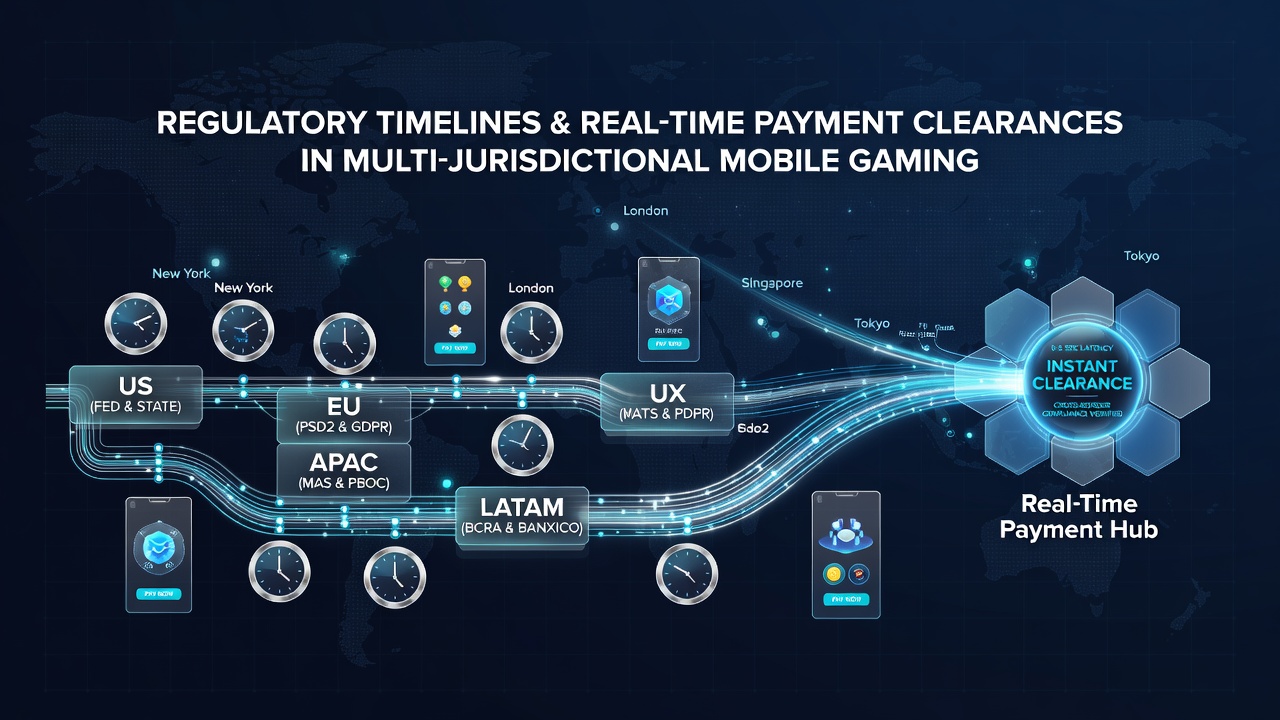
Payment service providers have responded by offering jurisdiction-specific APIs that update automatically when new deadlines approach, and this approach allows gaming companies to maintain single codebases while still satisfying varied clearance speed mandates. Evidence from industry reports reveals that operators who adopted these modular APIs reduced integration time by roughly 40 percent compared with custom builds developed for each market.
Cross-Border Coordination Challenges
Coordinating real-time clearances becomes complicated when one jurisdiction requires funds to settle before gameplay begins while another permits provisional credits until verification completes, and these differences have prompted gaming platforms to implement conditional transaction holds that release only after all involved regulators confirm compliance. Data compiled by the Asia-Pacific Gaming Association shows that platforms managing users across Singapore, Japan, and Australia encountered the most friction because each market introduced its instant payment rules on separate schedules between 2024 and 2026.
Those who've studied the sector note that sandbox testing environments run by regulators in multiple regions helped operators identify clearance bottlenecks before live deployment, and participation in these programs increased significantly ahead of the October 2026 milestones. Figures released by participating agencies indicate that 65 percent of tested mobile gaming payment flows met or exceeded required speeds once adjustments were made.
Conclusion
Regulatory timelines continue to dictate the pace at which real-time payment clearances evolve within multi-jurisdictional mobile gaming, and operators who align system updates with these staggered deadlines maintain smoother transaction processing across borders. Ongoing coordination among financial and gaming authorities in different regions suggests that future deadlines will further standardize clearance expectations while still accommodating local licensing variations.